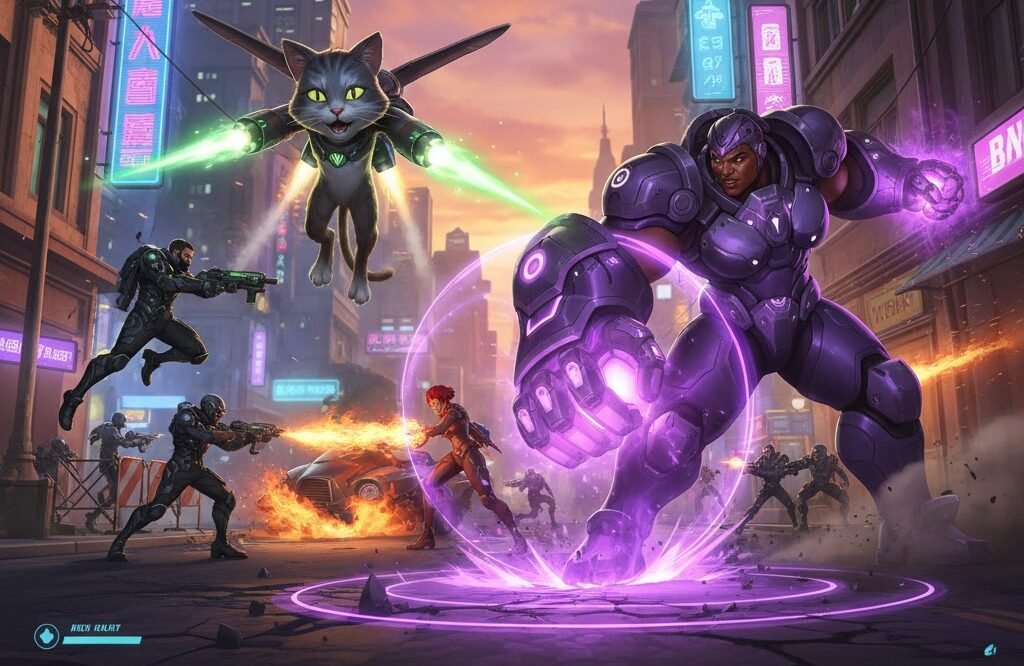
Overwatch Heroes, Jetpack Cat, and the Future of Overwatch Spotlight 2026.
Overwatch is one of those games people never really stop thinking about — even when they stop playing. You might uninstall it, swear you’re done, move on to something else… and yet, the moment you hear about new Overwatch heroes, an Overwatch Spotlight announcement, or something bizarre like Jetpack Cat resurfacing, that old curiosity kicks back in. Let’s be honest: few multiplayer games have left this kind of long-term emotional imprint.
Right now, Overwatch sits in an awkward, fascinating place. Overwatch 2 exists, technically stronger and more frequently updated than its predecessor, yet constantly under pressure to justify itself. Players aren’t just asking what’s new — they’re asking what’s next, and more importantly, what kind of Overwatch are we moving toward? That’s why conversations around overwatch new heroes, upcoming Overwatch heroes, and events like Overwatch Spotlight 2026 feel heavier than simple content drops. They feel like signals. Maybe even tests.
And then there’s Jetpack Cat. A joke? A dev Easter egg? A meme that refuses to die? Or — and this is where things get interesting — a symbol of how deeply the community wants Overwatch to surprise them again. Jetpack Cat Overwatch discussions aren’t really about a flying feline. They’re about creativity, risk, and whether Blizzard still has the courage to lean into the weird, joyful side of hero design that made Overwatch heroes iconic in the first place.
This article isn’t a hero list. It’s not patch-note filler, and it’s definitely not empty hype. We’re going to step back and look at the Overwatch universe as it exists now — how its heroes have evolved, why Overwatch Spotlight matters more than it seems, what upcoming Overwatch heroes are likely to look like, and why 2026 could quietly become a turning point. There will be speculation, sure, but grounded speculation. The kind that comes from paying attention, remembering the past, and acknowledging a few uncomfortable truths along the way.
Table of Contents
Overwatch and the Evolution of Its Heroes
When Overwatch first launched, its heroes didn’t just fill roles — they made statements. You didn’t pick Tracer because she was optimal; you picked her because she felt like freedom. Reinhardt wasn’t a tank spreadsheet choice — he was a walking promise of safety, chaos, and bad decisions that somehow worked out. Early Overwatch heroes were designed around instantly readable identities, and that clarity is a big reason the game exploded the way it did.
But here’s the part we don’t always say out loud: that original design philosophy was never meant to last forever. As metas evolved, players got smarter, and competitive play hardened, hero simplicity became both a strength and a limitation. Blizzard slowly started layering complexity — more conditional abilities, more resource management, more “if this, then that” mechanics. It wasn’t a mistake. It was adaptation. Still, some of that old magic got diluted along the way, and many players felt it even if they couldn’t quite articulate it.
From Personality-First to System-First Design
One of the clearest shifts in Overwatch hero design is where priorities sit. Early heroes were built personality-first. Kits followed character, not the other way around. Over time, especially moving toward Overwatch 2, the balance tipped toward system-first design: roles needed clearer boundaries, fights needed structure, and abilities needed to behave predictably in high-level play.
That shift explains why newer heroes sometimes feel “less iconic” at first glance — not worse, just more restrained. They’re designed to survive patches, esports scrutiny, and long-term balance cycles. The trade-off? Fewer immediately chaotic, personality-driven moments. Whether that’s a fair price is still very much up for debate.
Why Evolution Was Inevitable (Even If It Hurt)
Let’s be honest for a second — if Overwatch heroes hadn’t evolved, the game would’ve collapsed under its own weight. Static designs don’t survive live-service ecosystems. Players demand freshness, counters, and adaptation. The frustration many fans feel isn’t that heroes changed — it’s that change came with growing pains Blizzard didn’t always communicate well.
And this is where today’s conversations about overwatch new heroes and upcoming Overwatch heroes really come from. Players aren’t nostalgic for the past; they’re searching for reassurance that evolution hasn’t erased identity.
FAQ: Did Overwatch Heroes Lose Their Original Charm?
Short answer: not entirely — but it’s harder to surface now.
Overwatch heroes still carry strong identities, but modern design asks players to discover them over time instead of instantly recognizing them. That’s not inherently bad, but it does mean first impressions matter more than ever.
Overwatch Heroes That Changed the Game Forever
Every long-running game has characters people remember fondly. Overwatch, though, has something slightly different — heroes that didn’t just become popular, but actively reshaped how the game was played. These Overwatch heroes didn’t politely fit into the meta; they kicked the door open and forced everyone else to adapt. And yeah, sometimes that adaptation was painful.
Think back to the first time you realized Mercy could resurrect an entire team. Or when D.Va went from “fun but niche” to an unavoidable presence in every serious match. These moments weren’t just balance shifts — they were cultural events inside the game. Players argued, complained, celebrated, rage-quit, and then logged back in anyway. That emotional volatility is actually part of what made Overwatch feel alive.
What’s interesting, looking back now, is that many of these game-changing heroes weren’t perfectly designed. In fact, some were borderline broken. But they created stories. They forced players to rethink positioning, ult economy, team composition — sometimes mid-match, sometimes mid-season. Modern hero releases are more controlled, more careful. Safer. And while that’s understandable, it’s hard not to miss the raw disruption older Overwatch heroes brought with them.
Heroes That Redefined Roles, Not Just Meta
Certain heroes didn’t just dominate — they redefined what their role even meant. Reinhardt taught players how to move as a unit. Tracer made mobility a core skill instead of a niche tactic. Ana blurred the line between support and playmaker, changing expectations for healers permanently. After heroes like these entered the game, there was no going back.
This is why discussions about overwatch new heroes often feel oddly intense. Players aren’t just asking for someone strong — they’re hoping for someone transformative. Someone who changes habits, forces uncomfortable learning curves, and makes matches feel unpredictable again. That’s a tall order, especially in a game as mature as Overwatch.
Nostalgia vs Reality: Were They Really Better?
Here’s the uncomfortable truth: some of these legendary Overwatch heroes would cause absolute chaos if released today. Community tolerance for imbalance is lower, expectations are sharper, and data analysis is immediate. What felt thrilling in 2016 might feel exhausting in 2026. And yet… people still crave that spark.
That tension — between stability and disruption — sits at the heart of Blizzard’s hero design dilemma.
FAQ: Can New Overwatch Heroes Still Change the Game?
Yes, but differently.
Upcoming Overwatch heroes are more likely to introduce subtle, long-term shifts rather than explosive, meta-breaking ones. The impact is slower — but if done right, just as meaningful.
Overwatch 2 and the Pressure to Reinvent Heroes
When Overwatch 2 was announced, the promise wasn’t subtle. This wasn’t supposed to be a sequel in name only — it was framed as a necessary evolution, a course correction, maybe even a second chance. And nowhere did that pressure land harder than on the heroes themselves. Because if Overwatch was going to justify a “2,” then Overwatch heroes couldn’t just keep doing what they’d always done.
The shift to 5v5 alone forced Blizzard’s hand. Removing a tank slot didn’t just change team compositions; it rewired the entire rhythm of matches. Suddenly, every hero had more responsibility, more visibility, and less room to hide behind someone else’s mistakes. Tanks became brawlers. Supports became playmakers under fire. DPS… well, DPS had to prove they were more than damage numbers. This structural change made hero reinvention unavoidable, even if it unsettled players who were comfortable with the old flow.
What made it harder is that Overwatch 2 launched into a community already running low on patience. Years of slow updates, canceled features, and vague roadmaps meant that every hero rework and new release wasn’t just evaluated on gameplay — it was judged as evidence. Proof that Blizzard still understood what made Overwatch heroes special in the first place.
Reinvention vs Recognition: A Delicate Balance
Here’s the tricky part Blizzard keeps bumping into: reinvent a hero too much, and players feel like they’ve lost an old friend. Change too little, and the hero feels obsolete in a faster, leaner game. Some Overwatch 2 reworks walked that line well. Others… sparked debates that still haven’t cooled down.
This tension explains why overwatch new heroes in the Overwatch 2 era arrive with so much scrutiny. Players aren’t just asking, “Is this hero fun?” They’re asking, “Does this hero belong here?” Does their kit reflect the faster pace? Do they feel readable in chaotic fights? Do they add something meaningful, or just fill space?
And maybe most importantly — do they feel confident, or cautious?
Why Playing It Safe Feels Riskier Than Ever
Ironically, one of Overwatch 2’s biggest risks is restraint. Carefully balanced heroes are good for stability, sure, but Overwatch has never thrived on being merely stable. It thrived on moments — clutch plays, ridiculous ult combos, last-second saves that made you yell at your screen. When hero design becomes too conservative, those moments thin out.
This is why conversations about upcoming Overwatch heroes often circle back to one question: Will Blizzard dare to surprise us again?
FAQ: Did Overwatch 2 Improve Hero Design?
In structure, yes. In soul? That depends who you ask.
Overwatch 2 heroes are clearer, more balanced, and more sustainable — but some players still miss the raw unpredictability that defined early Overwatch.
Overwatch New Heroes — What Blizzard Is Doing Differently Now
At some point, it became obvious that Overwatch new heroes were no longer designed to shock the system. Instead, they’re meant to fit — into balance models, into competitive structures, into long-term content plans that don’t collapse after two patches. That shift didn’t happen overnight, and it wasn’t accidental. It’s the result of years of backlash, data overload, and a community that reacts faster than developers can realistically respond.
Modern Overwatch heroes arrive with clearer roles and fewer wild edges. Their abilities often revolve around conditional value — timing, positioning, resource tradeoffs. You’re rewarded for decision-making rather than raw mechanical chaos. On paper, this is good design. In practice, it can feel… quieter. Less explosive. And that’s where some players start feeling uneasy, even if they can’t quite point to why.
The unspoken goal behind newer hero releases seems to be sustainability. Blizzard doesn’t want heroes that dominate for six months and then get nerfed into irrelevance. They want heroes that survive. Heroes that age well. The problem is that aging well doesn’t always make a strong first impression — and first impressions matter a lot in a live-service game fighting for attention.
Design Trends You Can’t Ignore
If you look closely at recent hero releases, a few clear patterns emerge:
- Abilities with counterplay baked in from day one
- Less reliance on single, fight-winning ultimates
- Kits designed to scale with player skill, not overwhelm at low levels
- Personality expressed more through voice, lore, and visuals than mechanics
These aren’t accidents. They’re responses to years of complaints about oppressive metas and “must-pick” heroes. But there’s a quiet downside: fewer instantly iconic moments. Fewer heroes that feel unforgettable five minutes after you try them.
This is why discussions about upcoming Overwatch heroes often feel split. Some players want balance above all else. Others want that spark — the feeling that something unexpected just entered the game. Blizzard is clearly trying to satisfy both, and honestly? That might be the hardest design problem Overwatch has ever faced.
Are New Heroes Designed for Players — or for the Game?
Here’s a thought that might sting a little: some recent Overwatch heroes feel like they were designed to protect the game rather than excite the player. They stabilize metas. They fill gaps. They solve problems. All important things — but excitement doesn’t always survive problem-solving.
That’s why even rumors, jokes, or long-running memes like Jetpack Cat Overwatch grab attention so easily. They represent imagination without restraint. A reminder of when Overwatch wasn’t afraid to be strange.
FAQ: Why Do New Overwatch Heroes Feel Less “Flashy”?
Because they’re built for longevity, not dominance.
Flashy heroes tend to break systems. Modern Overwatch hero design tries to avoid that — sometimes at the cost of immediate emotional impact.
Jetpack Cat — Meme, Myth, or the Most Overwatch Idea Ever?
At first glance, Jetpack Cat sounds like a joke that went too far. A flying feline strapped into questionable engineering? It feels like something invented during a late-night dev brainstorm that accidentally escaped into the wild. And yet, Jetpack Cat Overwatch refuses to disappear. It resurfaces every few months in fan art, forum threads, half-serious speculation, and “what if Blizzard actually did it?” conversations. That persistence alone makes it worth taking seriously — not as a guaranteed hero, but as an idea.
What’s fascinating is that Jetpack Cat isn’t really about a cat. It’s about permission. Permission for Overwatch to be weird again. Early Overwatch thrived on tonal contrast: talking gorillas, time-jumping couriers, hyper-serious soldiers standing next to absurdity without explanation. Jetpack Cat fits that DNA perfectly. The fact that it started as a background gag or Easter egg only makes it more authentic. Overwatch has always done its best work when it leans into playful confidence rather than cautious logic.
And honestly? In an era where overwatch new heroes are often carefully engineered to offend no one, the idea of Jetpack Cat feels rebellious — which is probably why players keep bringing it up.
What Jetpack Cat Represents to the Community
If you strip away the meme layer, Jetpack Cat symbolizes a quiet frustration players don’t always voice directly. Many fans feel Overwatch has become more restrained, more careful, more predictable. Jetpack Cat represents the opposite: creative risk without immediate justification. A hero that exists because it’s fun, not because it neatly fills a spreadsheet gap.
That doesn’t mean players want chaos for chaos’s sake. It means they miss surprise. They miss logging in and thinking, “Wait… they actually did that?” Jetpack Cat is shorthand for that emotional response. Whether Blizzard ever turns it into a playable hero is almost secondary.
Could Jetpack Cat Actually Work as a Hero?
Surprisingly? Yes — at least in theory. A high-mobility, low-health disruption hero with unconventional movement could fit cleanly into modern Overwatch 2 design if handled carefully. Mobility limits, skill-based control, and clear counterplay could keep it balanced. The challenge wouldn’t be mechanics — it would be confidence. Blizzard would have to fully commit to the concept instead of apologizing for it.
FAQ: Is Jetpack Cat Coming to Overwatch?
There’s no confirmation — and that’s kind of the point.
Jetpack Cat persists because it represents creative freedom, not a roadmap promise. Whether it becomes real or not, it highlights what players are still hoping to feel.
Upcoming Overwatch Heroes — What We Can Realistically Expect Next
Talking about upcoming Overwatch heroes is always a balancing act between excitement and restraint. On one hand, Blizzard thrives on secrecy. On the other, the community has become exceptionally good at reading between the lines — job listings, dev interviews, offhand comments during Overwatch Spotlight segments. Put it all together, and a pattern starts to form. Not a leak-level roadmap, but a direction.
The clearest signal is that future heroes will likely continue prioritizing role clarity and game flow control. Overwatch 2’s faster pace doesn’t leave much room for experimental chaos unless it’s tightly contained. That means new heroes are less likely to introduce completely new roles and more likely to redefine how existing roles function under pressure. Think less “this hero breaks the game” and more “this hero quietly changes how fights are approached.”
That might sound underwhelming — until you realize how impactful those changes can be over time. Heroes that alter positioning norms, cooldown discipline, or team engagement timing tend to reshape metas without causing immediate backlash. Blizzard seems keenly aware that long-term acceptance now matters more than launch-week hype.
Design Gaps Blizzard Still Hasn’t Filled
Despite a growing roster, there are still noticeable gaps in the Overwatch heroes lineup — and this is where future additions become easier to predict. Areas Blizzard is likely exploring include:
- Supports with active map control, not just healing output
- Tanks that reward precision and restraint, not constant aggression
- DPS heroes built around disruption rather than damage spikes
- High-skill mobility heroes with clear punish windows
These aren’t flashy concepts on the surface, but they align with where Overwatch 2 is heading competitively. More emphasis on decision-making. More visible mistakes. More moments where smart play matters more than raw output.
Interestingly, this framework could even accommodate something unconventional — yes, even ideas adjacent to Jetpack Cat Overwatch — as long as counterplay remains obvious and skill expression stays high.
What Probably Won’t Happen (At Least Soon)
Here’s where expectations need tempering. We’re unlikely to see heroes that:
- Massively reset team fights with one button
- Blur roles to the point of confusion
- Launch without immediate balance guardrails
Blizzard has been burned too many times. The modern Overwatch ecosystem doesn’t tolerate prolonged imbalance, and the dev team knows it. That doesn’t mean creativity is gone — it just means creativity has to survive contact with reality.
FAQ: How Often Will New Overwatch Heroes Be Released?
Blizzard aims for steady, predictable hero releases rather than bursts.
That consistency helps players learn, adapt, and stay invested — even if it sacrifices some launch-day spectacle.
Overwatch Spotlight — Why It Matters More Than Patch Notes
On the surface, Overwatch Spotlight looks like a marketing beat. A presentation, some trailers, a few developer soundbites, maybe a roadmap slide everyone immediately screenshots and dissects on Reddit. Easy to dismiss. But that would be missing the real point. In the current state of Overwatch, Spotlight moments aren’t about features — they’re about trust.
For years, players learned to treat Overwatch communication cautiously. Promises shifted. Timelines stretched. Entire modes quietly disappeared. So when Blizzard puts a spotlight on the game now, it’s not just saying “here’s what’s coming.” It’s saying, “Here’s what we’re confident enough to talk about.” That distinction matters. A lot. Especially to long-time fans who still care about Overwatch heroes but don’t automatically believe anymore.
Patch notes tell you what changed. Overwatch Spotlight tells you why it exists. That context is something the game desperately needs. When players understand the intent behind hero reworks, new heroes, or structural changes, frustration softens — even if they don’t fully agree. Silence creates resentment. Explanation creates dialogue.
Spotlight as a Signal, Not a Showcase
What makes Overwatch Spotlight different from routine updates is intention. These events usually align with bigger shifts: new heroes entering the roster, changes to competitive philosophy, or long-term plans extending beyond the next season. In other words, Spotlight is where Blizzard reveals its thinking, not just its output.
That’s why discussions around overwatch spotlight 2026 already feel heavier than usual. Players aren’t expecting miracles. They’re expecting clarity. Where is Overwatch going? What kind of heroes are we getting? What lessons has Blizzard actually learned? These are emotional questions disguised as content requests.
And yes, this is where ideas like Jetpack Cat Overwatch sneak back into the conversation — not because people expect it to appear on a slide, but because Spotlight is one of the few places Blizzard could credibly say, “We’re willing to experiment again.”
Communication Is Content Now
Here’s the uncomfortable truth: for modern live-service games, communication is part of the content loop. Overwatch Spotlight doesn’t just supplement updates — it shapes how players emotionally process them. A mediocre patch explained well can land better than a strong patch dropped without context.
That’s why Spotlight events have become pressure points. They’re no longer optional hype machines; they’re trust checkpoints.
FAQ: Is Overwatch Spotlight Actually Important for Players?
Yes — arguably more than balance changes.
Overwatch Spotlight helps players understand the direction of hero design, upcoming Overwatch heroes, and Blizzard’s long-term priorities. That understanding directly affects player confidence and engagement.
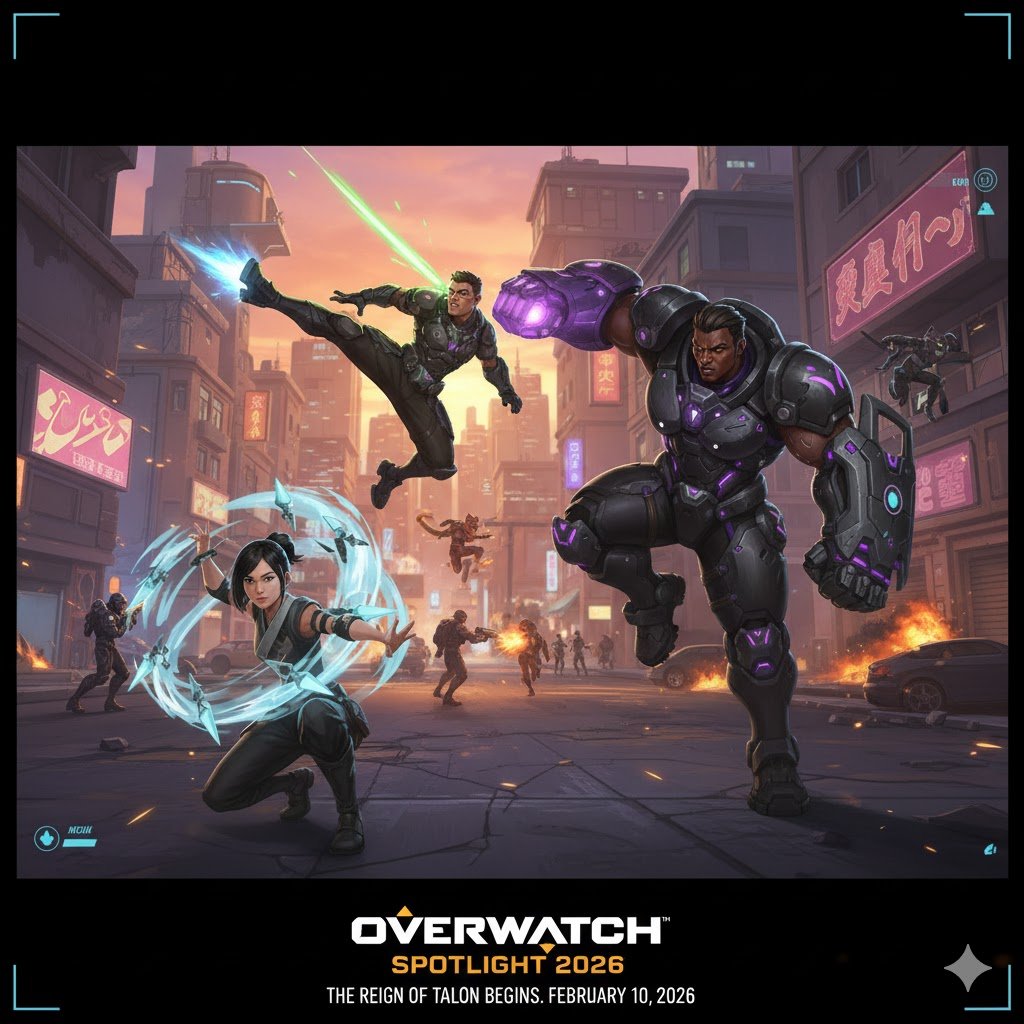
Overwatch Spotlight 2026 — Why This Year Feels Different
There’s something about Overwatch Spotlight 2026 that feels heavier than previous showcases — and not because Blizzard suddenly learned better presentation skills. It feels different because 2026 sits at a crossroads. By then, Overwatch 2 will no longer be “new enough” to hide behind transition excuses. Whatever the game is by that point will be what it is, not what it’s becoming. And players know it.
This is why expectations around Spotlight 2026 are oddly restrained but deeply focused. Fans aren’t demanding sweeping reinventions or impossible feature lists. They want confirmation. Confirmation that the direction of Overwatch heroes, hero releases, and overall game philosophy is intentional — not reactive. A confident Spotlight in 2026 wouldn’t need explosive reveals; it would need coherence. A sense that Blizzard knows where Overwatch is headed and why.
There’s also a subtle emotional undercurrent here. Many long-time players have already gone through the cycle of hope, disappointment, and cautious return. Overwatch Spotlight 2026 feels like a moment where those players decide whether they stay emotionally invested — or finally let go.
What a “Successful” Spotlight 2026 Actually Looks Like
Success in 2026 won’t be measured by shock value. It will be measured by alignment. Do the announced upcoming Overwatch heroes match the stated design goals? Do hero kits feel like natural extensions of the current meta rather than awkward experiments? Are Blizzard’s explanations confident — or defensive?
A strong Spotlight would:
- Clearly articulate hero design philosophy moving forward
- Show how new heroes fit into long-term balance plans
- Acknowledge past missteps without over-apologizing
- Leave room for creativity instead of locking everything down
Ironically, restraint combined with honesty might land harder than spectacle. Players don’t need to be dazzled anymore. They need to feel respected.
Why 2026 Is a Point of No Return
By 2026, nostalgia alone won’t sustain Overwatch. The roster of Overwatch heroes will be large, the competitive scene mature, and player expectations well-defined. That’s why this Spotlight carries more weight than previous ones — it’s not about recovery anymore. It’s about identity.
This is also why even playful concepts like Jetpack Cat Overwatch remain relevant in discussion. Not because they’ll appear on stage, but because they test Blizzard’s willingness to embrace imagination alongside structure.
FAQ: Will Overwatch Spotlight 2026 Decide the Game’s Future?
Not entirely — but it will shape perception for years.
Spotlight 2026 won’t make or break Overwatch overnight, but it will strongly influence whether players believe in the future of Overwatch heroes and long-term support.